Netiquette in marketing: Why respect is not a nice-to-have

Netiquette in marketing: Why respect is not a nice-to-have
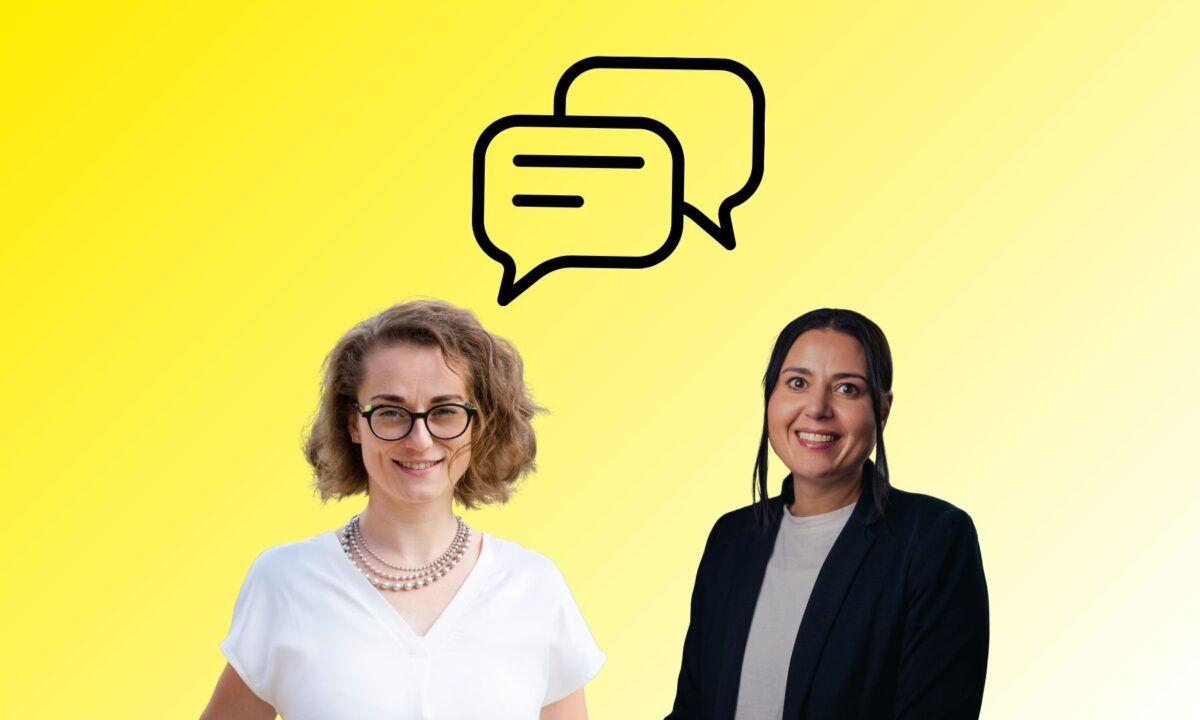
How do you handle rejections respectfully? What is the true cost of a lack of communication? And how is AI changing the appreciation of creative work? As a marketing service provider, I spoke with Sarah Brechensbauer, head of the marketing and communications department at the construction company Ed. Züblin AG. Together, we examine netiquette in marketing from both perspectives. This clarifies the standards we each set. (And what Christian values have to do with it.) Read the interview and take away concrete insights for your daily work – whether you work in marketing on the client side or as a service provider.How do you handle rejections respectfully? What is the true cost of a lack of communication? And how is AI changing the appreciation of creative work? As a marketing service provider, I spoke with Sarah Brechensbauer, head of the marketing and communications department at the construction company Ed. Züblin AG. Together, we examine netiquette in marketing from both perspectives. This clarifies the standards we each set. (And what Christian values have to do with it.) Read the interview and take away concrete insights for your daily work – whether you work in marketing on the client side or as a service provider.
What does netiquette in marketing mean to you personally?
Sarah: For me personally, it encompasses many different things. Firstly, of course, in relation to my team, my colleagues, but also in our interactions with service providers – and also how we communicate things in general. Our job is to communicate, and to communicate effectively. This doesn't just apply to customers or investors. We all engage in marketing, whether we're marketing employees or not. Every employee is a continuous marketing tool –
Monika: – a poster column.
Sarah: Exactly. Depending on how we communicate – whether in customer meetings or with service providers – we present ourselves personally, but of course also always the company. Therefore, it doesn't matter who you're talking to: you should treat everyone the way you would like to be treated. That's my motto.
Monika: … or better.
Sarah: Or even better – yes, but that's the minimum requirement.
Is netiquette at Züblin corporate culture – or just your personal preference?
Sarah: Both. It's my personal commitment, but it aligns perfectly with our company values. Respectful interaction is deeply ingrained in our culture, whether towards employees, clients, or service providers. There aren't any specific guidelines for this – it's based on intuition. And it works well.
My colleague Tobi, for example, answers every single sponsorship request individually and respectfully – even though he has to decline most of them. For me, that's a perfect example of netiquette.
As a service provider, I often experience companies demanding free trial work or pitches.
After submitting an offer, sometimes there isn't even a rejection – it's simply ghosted. How do you, as a marketing manager, perceive this?
Sarah: Unfortunately, I also perceive this to some extent and have witnessed it firsthand. Whenever I encounter it, I try to actively point it out – and of course, to act differently myself. Because it simply comes down to respect. But I also try to understand why this happens. Is it because people are genuinely too busy and forget? Or is it because they've already experienced that a rejection isn't well received – that they react with offense or try to pitch again?
Having experienced something like this more often, I can understand why some marketers feel uneasy about sending out rejections.
Monika: I find it really interesting that there are offended reactions. By ghosting, companies essentially close the door on the service provider. After being ghosted, the provider won't pitch again. And conversely: If a service provider reacts with insults or aggression, a marketer within the company will also say, "No, this person isn't a good fit."
It's a shame because this miscommunication closes doors that would otherwise have been helpful.
Sarah: Absolutely. And I even understand it to some extent, because you often put a lot of heart and soul into it. Nevertheless, it's highly unprofessional to react with offense or give snide replies. And that's exactly what it leads to: you wouldn't even consider that service provider next time.
What is your perception of this as a service provider? How many companies contact you, how many ghost you? And how has this developed in recent years?
Monika: That's a great question. I've been self-employed for almost exactly eight years now. In the beginning, the response rate was very high. I pitched a lot more for free, was much more proactive in acquiring clients – and consequently, the rates of non-response, of ghosting, were appalling. Basically, I only knew what was going on if I'd received an offer. That was in about ten to fifteen percent of cases.
I only really knew what was going on once I'd received a confirmation. That was in about ten to fifteen percent of cases.
Monika Wolf Weber, copywriter
Based on this, I further developed my acquisition process. Now I have an order rate of eighty to ninety percent – and the rest are situations where you can say on equal terms: "There was a competitor with more experience" or "Your price was too high."
It was a long road, involving many measures: advance payment, a clear rejection of free preliminary work, albeit with a nice offer: "I'd be happy to do it, but only for a fee."
Do you have a clear process for that – or do you decide based on gut feeling?
Monika: I do that completely by gut feeling. Luckily, I'm still young enough to make individual decisions.
If it's a client with whom I can very well imagine achieving a lot together in terms of subject matter, personality, and field of work, then I will definitely ask again.
On the other hand, if I'm already drowning in work and it's a sole proprietor with a very small budget who would prefer to write everything himself – then I'll leave it to the universe whether he gets back to me or not.
Is there an experience that has had a lasting impact on your view of netiquette?
Sarah: I wouldn't say there was one single experience. It's more the experience you gain over the years – professional and life experience. Here in the company, I've dealt with a lot of service providers. There have been many positive experiences, but of course also one or two negative ones, which also shape you.
I am also a service provider in the wedding industry and I know ghosting from this perspective as well – sitting on pins and needles, not knowing: Will I get the job now or not?
Monika: It depends on how much heart and soul you've put into it…
Sarah: Exactly. And I think: I want to work with people where it's fun. It doesn't matter to me whether they're employees and colleagues – or service providers who are, in a way, temporary colleagues with whom you rock a project.
First and foremost, it has to be a good fit on a personal level. You have to share the same goals and values to some extent for the project to be successful. I firmly believe that now.
And for you, Monika – is there a specific example that has shaped you?
Monika: Of course, for me too, it's a process of development – you build it up step by step. On the negative side, I often find that marketers in companies – especially in large corporations – often don't realize that for a service provider, it's often a matter of survival: If I don't send the briefing now, but only in two or four weeks, then the service provider suffers two or four weeks of lost income. This is something that comes up again and again with my best clients.
Otherwise – at the risk of sounding trite – your example was truly special to me. Which is also what led to us having this conversation today.
Last summer I wrote a proposal for website content for Züblin. You clearly communicated the deadline for the decision – and then you even called me personally and explained in a private phone call why you had chosen a competitor.
That was such a factual, constructive and friendly rejection that the door between us didn't close afterwards, but rather we are talking here today about netiquette in marketing – completely without a joint project, without any financial motives, simply on a human level.
I've never experienced anything like this before. So: Thanks for the cancellation!
Thanks for canceling!
Monika Wolf Weber, copywriter
Sarah: That's incredibly kind feedback. It almost brings tears to my eyes. Of course, I'm very happy about it – and at the same time, it also makes me sad. Because when someone stands out so much for handling this topic respectfully and with appreciation, it shows that in most other cases, it's simply not the case.
Monika: In almost all other cases.
Sarah: Exactly. I think that's a shame. And you're bringing up an important point: For you service providers, it's really about your livelihood – including how quickly invoices are paid. That's a huge issue.
I've met service providers who went bankrupt – not because they didn't have enough work, but because companies didn't pay or paid late. Conversely, it must also be said that in large corporations, many people want to have their say, and processes take longer than one would like. This is something service providers need to learn and factor in.
Monika: Yes, exactly. That's also part of my experience. It's important to me to always discuss the payment terms very clearly before working together. If it's actually thirty or sixty days – fine, then I'll adjust accordingly. I've built up a buffer for that by now. But this can really go wrong, especially for younger or less experienced service providers.
Sarah: I think so too. Especially in the first one, two, three years of self-employment – I imagine that to be really challenging.
Does it make a difference whether the collaboration works well on a personal level – or should professional work be independent of that?
Sarah: I firmly believe that for a project to succeed, it's crucial that the people involved are a good fit. What's your take on that after eight years of self-employment?
Monika: I always communicate professionally, always deliver the highest possible quality, and always think things through. The personal aspect doesn't change that.
However, I admit: I recently had a client who was under a lot of internal pressure, and this pressure was sometimes passed on to me in a somewhat aggressive manner, ignoring my advice.
And in that case, I have to admit that it's easier for me to go the extra mile when I know: The tone will remain friendly, no matter what happens – after all, we're a team. And: The client is open to working according to best practices and listening to my advice.
Then I am happy to continue working on the project even outside of working hours.
Incidentally, one area where I quickly draw the line is when payment is delayed or only arrives after repeated reminders. For me, punctual payment is a basic requirement of respect. If this is repeatedly not the case and open discussions don't change anything, I terminate the collaboration.
What behaviors of service providers make collaboration difficult for you and your team?
Sarah: Yes, there are several things. Firstly, of course, not delivering on time: If something is promised by Friday, then I expect a response by Friday. If someone can't manage it, I expect them to at least say, "I need it by Monday." Not getting in touch at all – that's difficult.
Then: don't promise anything you can't deliver. Sometimes you get the feeling that a good salesperson promises something that the implementer simply can't deliver.
And a lack of foresight: I hire experts and expect them to advise me and think outside the box. We once had a film crew working on a documentary – and in the end, we were missing a narrator, someone no one had considered or even offered as an option. This, of course, resulted in unexpected additional costs for us. It wasn't a good collaboration, in my opinion.
Monika: I have a positive counter-example here: Recently, I was on-site at a corporate client's location for a content meeting. At the same time, a photo shoot was taking place there – for a guidebook that I had written.
The photographer finished much faster than expected and spontaneously asked if he should shoot some other subjects. After consulting with my colleagues, I dashed over and briefly briefed the photographer on which images we might need for future advice column topics.
The customers were absolutely delighted, and the resulting photos are still circulating. I think it's great when, as a service provider, you're allowed to contribute so spontaneously and act as part of the team – even if your email address doesn't include the company name.
Sarah: Absolutely. And I think it shows how passionate you are and that you enjoy what you do. That always pays off. I'm one hundred percent sure of that.
Monika: That's right. If I had to name one secret to success, it would be: being friendly and thinking ahead.
This helps everyone, is fun for everyone – and then you simply want to work more closely with such a service provider.
Sarah: That's the simplest recipe – it costs absolutely nothing. You don't need expensive software, no materials, you don't need to invest anything. You just need to be nice, think along with others, and communicate. (Even though "nice" isn't a word with positive connotations – unjustly so.)
You don't need expensive software, materials, or any investment. You just need to be kind, think along with others, and communicate.
Sarah Brechensbauer, Head of Marketing & Communications, Ed. Züblin AG
Monika: I once read a book about success. It didn't say that you absolutely have to be super creative, but rather that you should do four things above all to be successful: communicate well, be reliable, be hardworking, and be nice.
If all service providers took that with them – a certain professional pride, the feeling that I want to do good work, that I am reliable and nice and that I think ahead – then the marketing world would already be a better place.
Sarah: Exactly. And I want to feel that the other person is passionate about my project. I'm passionate about it myself and I firmly believe: you do things well when you're passionate about them. When you sense that someone is passionate about something, it's contagious – it's infectious and makes it five times more fun.
Monika: From the service provider's perspective as well: I only accept projects that I'm passionate about. If it's a great product that delivers on its promises and you can do honest marketing for it – then that's much nicer than just churning out some emotionless website copy.
Sarah: If you can choose your jobs, clients, and service providers, then I think you've achieved it in self-employment. That should be the goal.
AI is intensifying the netiquette debate.
I notice this in the content field: comments like "Why does this cost so much?" or a client who said: "Why should I hire you to write case studies for me – AI can do that in five minutes." What do such statements do to respect and appreciation in professional interactions, in your opinion?
Sarah: I think we need to put the AI issue into perspective. AI is incredibly important and indispensable, and it will continue to change our world. However, it won't completely eliminate our jobs, but rather change and support them.
There are already initial studies showing that AI-generated website content do not perform nearly as well as really good, professionally written content.
Regarding netiquette, the real problem is that appreciation for human work is declining. "Why do I still need you?" – this is an attitude that is spreading along with the AI euphoria.
What's often overlooked is that AI is only as good as the human who controls it, interprets the results, and thinks strategically. It can provide support, but it can't replace everything.
Monika: Exactly. And what AI searches prefer isn't what it was trained on – it already knows that. What's needed are original perspectives, new approaches, real added value. AI simply can't provide that. In the content area, you might save 20 to 30 percent of the time – but that never comes without a loss of quality.
Sarah: And everything hinges on the prompt. We both use AI – but it doesn't replace us. I'm not afraid of that.
Monika: Me neither. We know her limits precisely because we work with her every day.
What needs to change so that in five years we no longer need to talk about netiquette in marketing?
Sarah: Everyone should understand that they should treat people the way they want to be treated. This applies not only to marketing, but in general – it sounds similar to wanting world peace, but that's how I see it. I don't think any of us wants to be ghosted, insulted, or attacked – whether online or in person.
I don't think any of us want to be ghosted, insulted, or attacked – whether online or in person.
Sarah Brechensbauer, Head of Marketing & Communications, Ed. Züblin AG
Monika: Absolutely. And that starts with working conditions. Many female marketers are alone in their companies, completely overworked, and don't even receive the appreciation of a team or staff. That, too, is about treating your employees the way you want to be treated.
Sarah: Exactly. And also set boundaries yourself. Take a good look at yourself, intervene instead of just watching. Actively communicate the values. And give open, honest feedback – even if it's sometimes uncomfortable. Nobody likes giving negative feedback, but in the long run, it helps everyone.
Monika: Exactly. And it also includes showing appreciation in the sense that one doesn't necessarily have to engage in price dumping – that one accepts a fair price and factors it into the budget. Netiquette is more than just respectful dialogue: it would restructure the entire marketing industry. I'm all for us working on it.
Sarah: Absolutely. And if we can now motivate one or two people to send a rejection instead of ghosting – or to give nice, honest feedback – then we've already achieved a lot with this conversation.
Monika: That's right. Thank you so much, dear Sarah!
Sarah: I was absolutely delighted.
About Sarah Brechensbauer
Sarah Brechensbauer heads the marketing department at the Swabian construction company Ed. Züblin AG. Previously, she worked there for over six years as a group leader in event management, bringing with her extensive experience at the intersection of marketing, communications, and corporate ethics. In addition to her role at Züblin, she has also been active as a freelance wedding officiant and moderator with her business "Glücksfräulein" since 2020. She studied business administration at the South Westphalia University of Applied Sciences.

Your next step?
Many marketers simply want reliable, friendly service providers who can take the burden off their shoulders. That's exactly where I come in: copywriting, content marketing, SEO, GEO – either as a one-off service or as ongoing support that frees up your time and makes your brand visible in the long term.