Writing a newsletter – here's how (easier)


Writing a newsletter – here's how (easier)
You've decided to launch your own newsletter? A smart move! Far too few companies actually rely on email marketing. Often, they simply lack the know-how to write professional newsletters. But only with your own in-house marketing channels can you be independent of the whims of SEO, AI search, LinkedIn, and the like. As an experienced newsletter writer, I'll reveal what you need to consider when writing your newsletter to convince existing customers to make repeat purchases.You've decided to launch your own newsletter? A smart move! Far too few companies actually rely on email marketing. Often, they simply lack the know-how to write professional newsletters. But only with your own in-house marketing channels can you be independent of the whims of SEO, AI search, LinkedIn, and the like. As an experienced newsletter writer, I'll reveal what you need to consider when writing your newsletter to convince existing customers to make repeat purchases.
What you can expect in this post
The goal: Why write newsletters?
Newsletters activate people who have already shown interest in you and your company or have interacted with you: otherwise their email addresses wouldn't be in your mailing list, right?
What's next? Writing a newsletter is like everything else in life – it starts with the important questions: What do I want to achieve with this newsletter? Who is my target audience? And what is my goal?
- Strengthen image
- Promote events
- Introducing a new product
- Increase sales and bookings
- or or or

In any case, your newsletter should entice your recipients to take action. Whether that means clicking on a blog post, viewing an item in the shop, accessing information, or interacting with you – that's up to you. You achieve this by planning the structure, content, and calls to action accordingly.
You can measure the success of your newsletter by analyzing your readers' interactions, such as clicks and purchases. A high click-through rate (CTR) is a good indicator that your readers like your newsletter content.
The structure: Newsletter - what needs to be included?
So there you are, sitting in front of your screen – and you can't think of anything, or you have way too much to write about for your customers or employees. Sound familiar? A blank document can be paralyzing and blocking. But you can easily overcome writer's block when writing newsletters: Create a logical structure for your newsletter that you can reuse every time.
Why? A consistent structure makes writing easier for you and reading easier for your readers. A user-oriented structure guides your subscribers through the newsletter and meets their expectations. A well-structured newsletter should contain these five elements:
1. Sender
Countless emails land in my inbox every day. And if I'm honest, I only open the ones from senders I know, like, and trust. As the sender, you have very few characters to identify yourself. So keep it clear, concise, and without special characters – simply trustworthy.
2. Subject line
Should I open this email or not? The subject line will determine your reader's decision. Your time, and mine, is limited. Your subject line should capture and hold the recipient's attention in just a few characters: short and snappy.
Make it clear in the subject line what the newsletter is about – and leave readers wanting more. As a rule of thumb, aim for a length of about 50 to 60 characters. The more of your readers open the newsletter on their mobile devices, the shorter your subject line should be.
3. Head area
Congratulations, your recipient has taken the time to open your newsletter! Their gaze is now drawn to the header. Here you should pay attention to two things:
- Demonstrate your professionalismby ensuring your reader can immediately identify the sender and subject line. And not just through words. A visual recognition element, such as your logo and corporate design, is essential.
- This is where you should place the most compelling benefit argument of your newsletter: Why should your customer or employee continue reading?
4. Content area
Now is finally the time when you can unpack everything that will lead to your email marketing goal:
- Informationthat is permanently relevant to your target audience: blog posts, product descriptions, services, etc.
- News: Offers, services, events, anniversaries, products, discounts, content, etc.
- Entertainment: (Competition) games, quizzes, surveys
- Calls to action (CTAs): include a link or button to at least one current topic/project/article that your recipient can learn more about on your blog, shop, or website.
You can include all this and much more in your newsletter. Go wild! Include roughly the same number of content elements in each subsequent newsletter. This way, your readers know what to expect.
5. Footer
This section primarily contains legal information : a link to your imprint and privacy policy, as well as the unsubscribe link for your newsletter. You can find current information on GDPR regulations in this area, for example, at e-recht24.de .From a marketing perspective, you can also ideally include a request in the footer for recipients to share your newsletter.
Content planning: How do you write a newsletter?
A question I often hear as a professional copywriter is: "How do you write a newsletter?" My answer: with a goal, structure, and a plan. You now know what goal you want to achieve with your newsletter and what structure it should have. But the most important thing is still missing: the content.

Filling your newsletter with relevant content and topics is a company-wide responsibility. Get together with your colleagues and create a content plan. This works best if you answer the following questions:
- What important events, anniversaries, product launches, etc. are scheduled for the coming year?
- What topics are relevant to your target audience at what time of year (or always)?
Gather these topics and related ideas. Record them in your editorial calendar and distribute the content wisely throughout the year. This is the only way to consistently produce high-quality content for your newsletter.
With these topics and the newsletter structure, most of your next mailing is already in place. Now it's finally time to craft snappy, concise headlines, content, and calls to action that will get your customers moving. And you can do it! Word by word, sentence by sentence. And don't forget the images.
The tools: How to create a newsletter
You have the goal, structure, and content. Now it's time for implementation: Creating newsletters is quite simple and intuitive with various newsletter tools and programs. I personally like working with the German provider CleverReach, which is very well suited for beginners in email marketing. With various training videos, CleverReach quickly enables you to create professional mailings with this software.
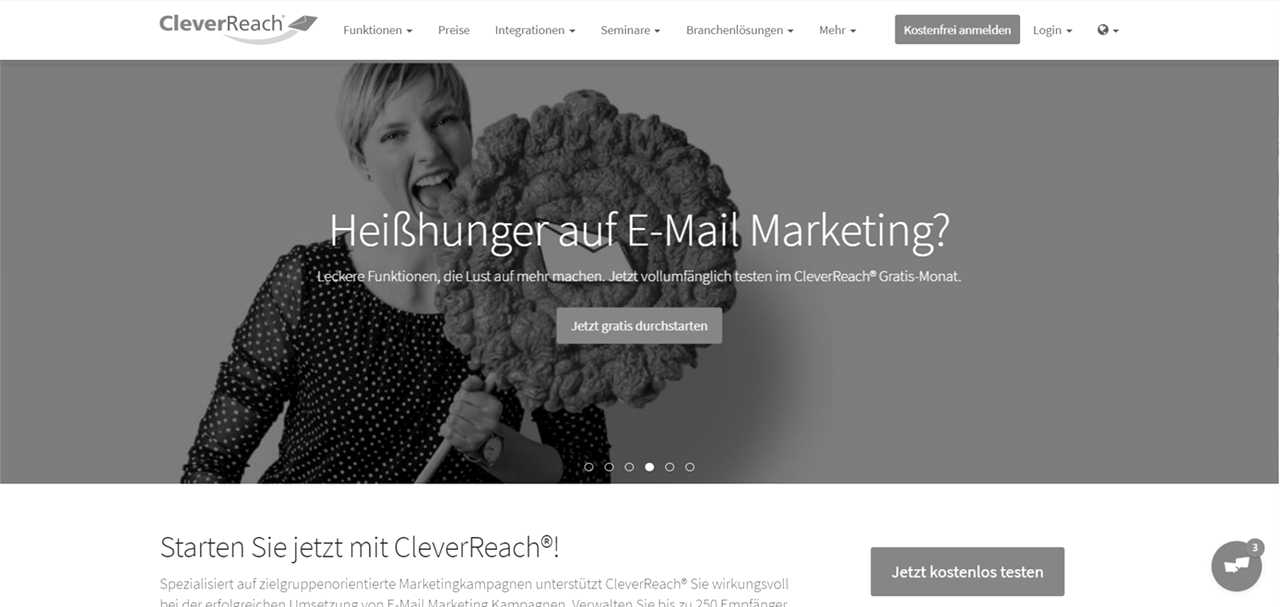
Once you've created a so-called "template"—that is, a structural template—you can and should reuse it. Of course, the newsletter content will change each time. You'll also continue to develop your email template over time. Nevertheless, you've created a newsletter—your newsletter. Great!
The target audience: employee newsletters and customer newsletters
Depending on your target audience, you should consider different things. A promotional newsletter for customers needs different content, a different tone, and serves a different purpose than a newsletter for employees. But you probably already know that, since we discussed your goal at the beginning.
Newsletter or blog? Newsletter and blog!
Good question: Newsletter or blog? A well-maintained blog with plenty of relevant posts from a professional copywriter is at the heart of your SEO content strategy. Your newsletter then carries this important information to where it's needed and read: to your customers or employees.
You can certainly maintain a company blog without writing a newsletter. However, a newsletter without blog content isn't really useful: it lacks valuable added value for your customers – and for you. Therefore, newsletters and blogs complement each other strategically.