Content templates for SEO & GEO: easier writing – with and without AI

Content templates for SEO & GEO: easier writing – with and without AI
Do you need another new product page for your online shop? Or are you working on a website relaunch and suddenly need 100 new case studies? And with every content, you're starting from scratch… Stop! There's a tool that professional copywriters have been using for a long time: content templates. Once created, your writing always follows the same structure. This makes life easier for everyone who has to brief, write, or edit content: It's faster, and the results are comparable—regardless of whether you outsource the copywriting, do it yourself, or use AI. As an experienced SEO copywriter, I'll reveal how I create SEO and GEO-optimized content using templates and show you what a template for my website looks like. Curious?Do you need another new product page for your online shop? Or are you working on a website relaunch and suddenly need 100 new case studies? And with every content, you're starting from scratch… Stop! There's a tool that professional copywriters have been using for a long time: content templates. Once created, your writing always follows the same structure. This makes life easier for everyone who has to brief, write, or edit content: It's faster, and the results are comparable—regardless of whether you outsource the copywriting, do it yourself, or use AI. As an experienced SEO copywriter, I'll reveal how I create SEO and GEO-optimized content using templates and show you what a template for my website looks like. Curious?
Your website? It consists of a handful of page types
The good news: Hardly any well-designed website consists of more than 10 different page types. Even the largest website doesn't need more than 20 templates – regardless of whether it's a B2B website for a medium-sized company or an online shop.
- category
- Subcategory
- Product or service page
- Content types such as magazine, case study, news with overview pages
- a handful of different post types
- Special pages such as Homepage, About Us, Contact
- Depending on the website strategy, this may also include configurators or locally optimized landing pages
That's it! Anything more simply means unnecessary effort in terms of content, design, and programming.
So, if you're facing a major relaunch: You don't eat an elephant in one go. You eat it piece by piece. (Poor elephant!)
And now you know: Your website consists of a maximum of 20 different page types. That's doable.
This is how working with content templates makes your life easier
Let's be realistic: briefings take time. Content corrections take time. And: time costs money. If you create a content template once (or have one created), you'll save time, stress, and your marketing budget.
Five reasons immediately come to mind:
1. Writing is faster and easier: you can follow the content structure from content element to content element
2. Getting quotes becomes easier: Content template + keyword/AI prompt set ✓
3. Less briefing effort in day-to-day business
4. Ensuring quality becomes easier: whether by the SEO copywriter or internally with the help of AI
5. Design costs decrease: the content always fits into the same templates
Templates for SEO, GEO and real people – what's the difference?
Today, we write website content for three "target groups": people, traditional search engines (SEO), and AI systems (GEO). For each of them, "helpful" content means something different. A good content template manages to appeal to all three.
What should you pay attention to in each case?
Human: clear structure, helpful content, good readability and user experience (UX)
Search engines: logical structure contributes to the SEO strategy, contains relevant keywords and is geared towards search intent; the page has schema markup and is technically clean = easily crawlable.
AI systems: at GEO, there is a stronger focus on trust elements, citable summaries, stronger teasers, and external links for concontent.
With the right know-how, this can be transformed into a content template that appeals to all three target groups.
But how?
This is what a solid content template for SEO content will look like in 2026
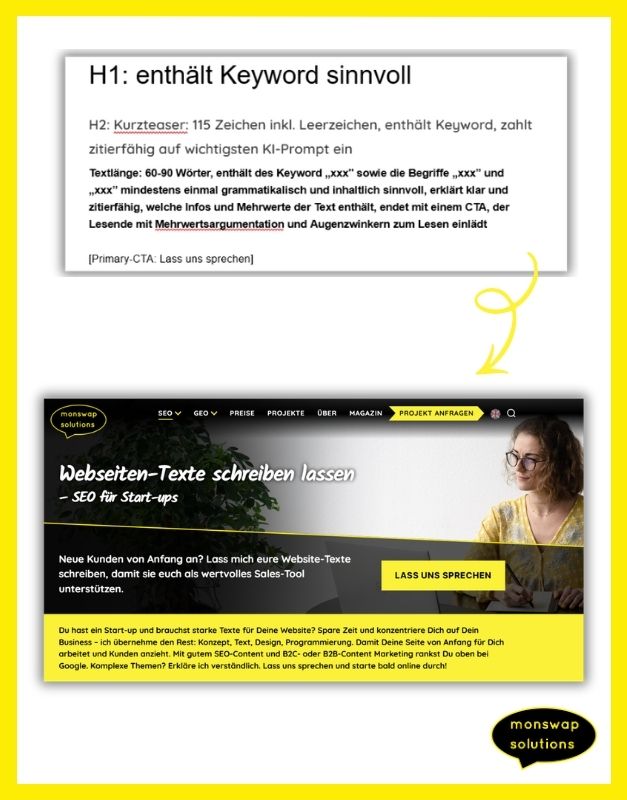
Yes, there are a maximum of 20 different templates. Per website. And each one should be structured to support YOUR brand's SEO and GEO strategy. So, spoiler alert: copy/paste isn't a good idea with content templates.
built the content template for an SEO- and GEO-optimized services page for monswap-solutions.com . You can see what it looks like live on my landing page , "SEO Content for the Target Group of Startups ."
This is what one of the content templates I'm currently working with looks like.
Elements that every content template on a website contains
- Trust element
- Header with H1 heading, teaser, primary call to action (CTA)
- content
- Picture
- Content + Image
- CTA elements
Additional elements, depending on the search intent:
- Comparison table
- Testimonial
- Expert quote
- Teaser + links to relevant pages
- Key figures
- Advantage argument
- Customer examples
- FAQ element
Your SEO or GEO strategy should already roughly define which elements each page type needs to contribute to the respective search term and/or AI prompt.
Based on this, you can now build the content template that you can use as the foundation for your web design. Hooray!
What does that look like for my customers?
GEO strategy & website content
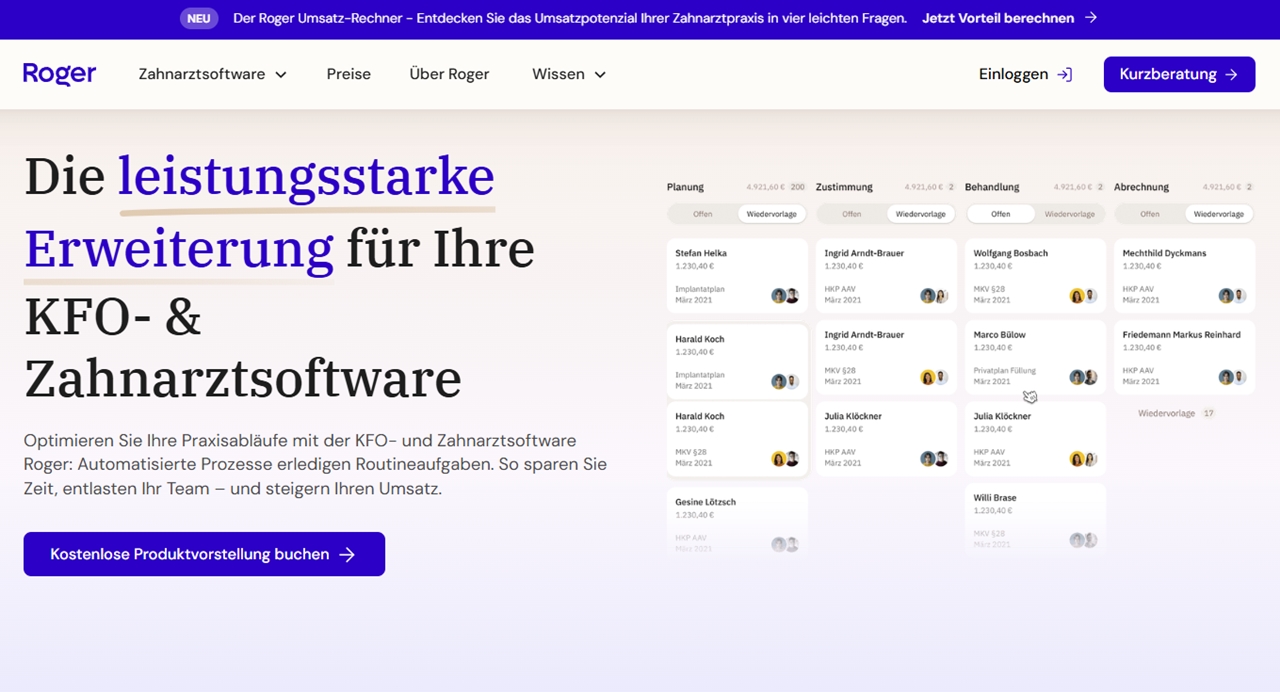
goroger.com, Berlin/DE
Roger is a dental software start-up in the go-to-market phase, aiming to attract new dental practices as customers through organic traffic.
The relaunch of goroger.com focused on using strategic GEO for start-ups to generate as much traffic as possible via Google and AI search. After six weeks, the site was ranking on page one for its core keyword set and was already being recommended for relevant AI prompts.
Strategy & GEO content for terracasa.studio
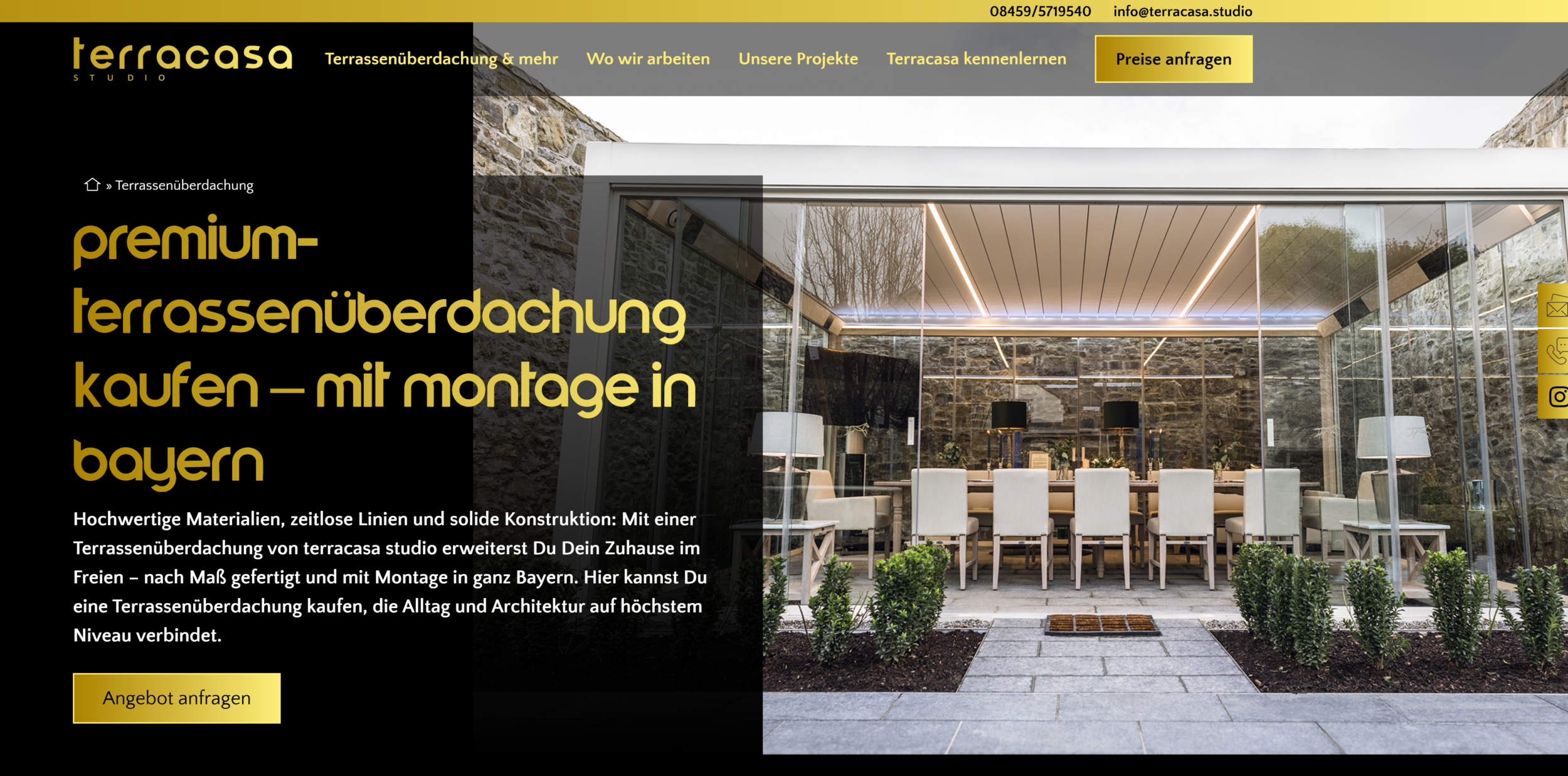
terracasa studio, Manching/DE
terracasa.studio is the website of a construction company specializing in premium patio covers in Bavaria.
For their website launch, I researched suitable AI prompts following a GEO audit and developed a German SEO and GEO strategy. Based on this, I created GEO content that promotes terracasa studio’s high-quality products in a factual and engaging manner. I also supported the implementation of price configurators on both the conceptual and content side and now provide monthly live GEO and SEO reports.
Beyond the launch, I regularly produce German GEO content and oversee client input and feedback. I also provide external service providers with feedback on design and technical implementation.
German copywriting for bauhaus.info
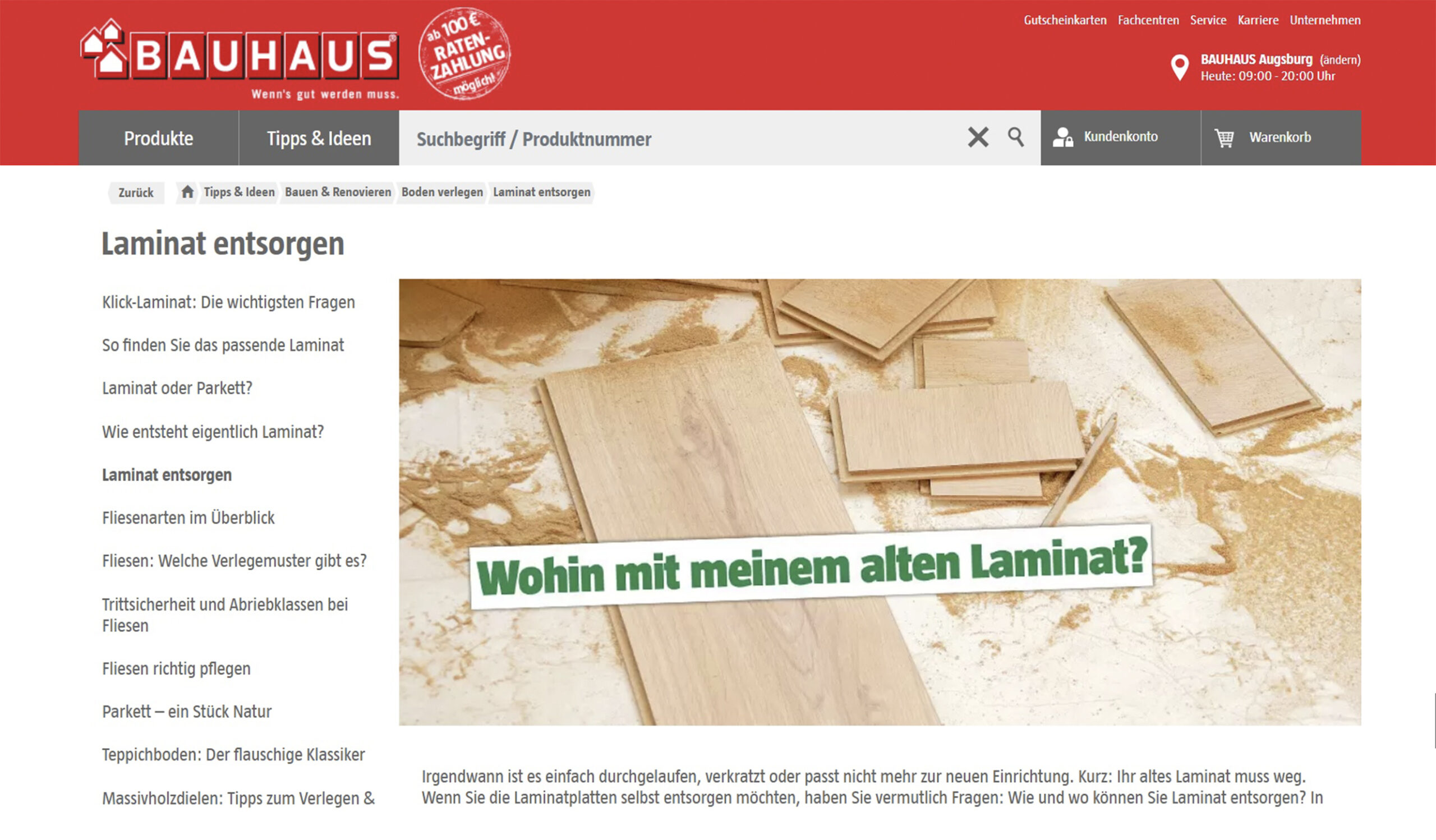
DWA Dynamic Advertising Agency AG, Belp/CH
bauhaus.info is the website of a chain of hardware stores that caters to handymen and DIY enthusiasts. DWA is an agency that exclusively works for BAUHAUS.
I have been writing DIY guides and category copy for DWA since 2022, as well as revising the client's existing SEO contentIn addition to keyword research and topic planning for various content, I proactively advise the BAUHAUS digital marketing team on content design and SEO best practices.
Your next step?
Many marketers simply want a reliable, friendly sparring partner who can take the burden off their shoulders. That's exactly where I come in: with content templates, SEO content, SEO and GEO consulting – either on an ad-hoc basis or as ongoing support that relieves the pressure on your marketing team and makes your brand visible in the long term.
What clients ask me about content templates…
Content design is the umbrella term: it encompasses the complete conception of your content. This means creating content that conveys meaning, is as user-friendly as possible, logically structured, and visually appealing.
Content templates are individual components of this concept. Just as web design affects the entire website, each page requires a different design template.
All three are possible. Over the past eight years, I've found that most web designers are very grateful to work with a (ideally already) populated content template. (This also makes their budget planning easier.)
Of course, it's also possible for me, as a copywriter, to write content within an existing design template. However, I prefer the tried-and-tested principle: "Form follows function." And the function of a website reflects the strategy in the form of content. Design then underscores this function.
Ideally, the content template comes first, then the web design – and through collaboration, the copywriter and designer then go through a joint round of revisions. This is how the best result is achieved.
Yes, surprisingly well, in fact. A content template provides the AI with a structure it can follow – headings, elements, and order are already defined.
Without a template, AI content often veers off course and does strange things. With a template, sample content, and tone of voice, the structure and length of the content elements remain more consistent, regardless of who or what is writing it.